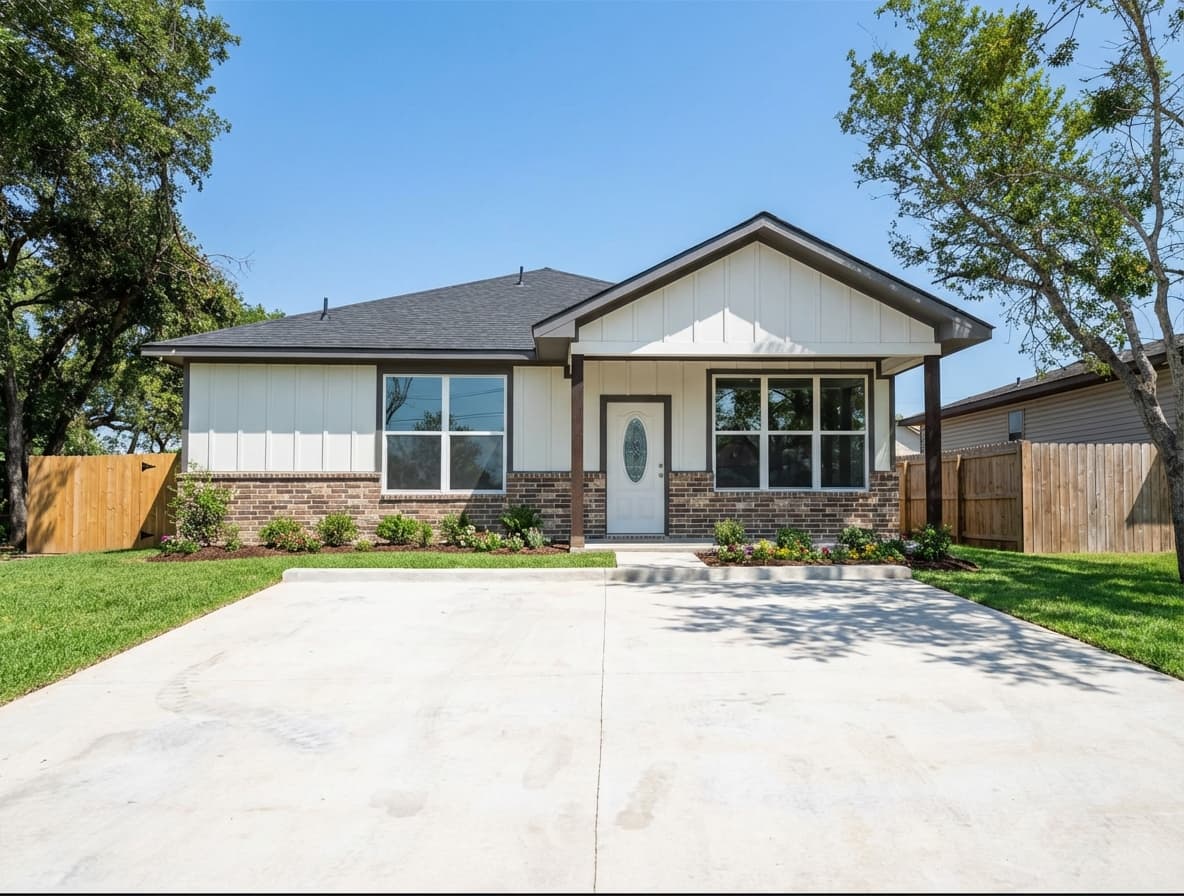
A driveway isn't just an afterthought – it's literally your home's welcome mat and an important asset. Many homeowners in Bryan–College Station are choosing concrete driveways for good reason. A well-built concrete driveway can last for decades with minimal upkeep, while enhancing your property's curb appeal (and even its value) in the meantime.
Built for Texas Heat
Summers here get blisteringly hot, often in the high 90s °F or more. These extreme temperatures can wreak havoc on some paving materials. Asphalt, for example, tends to soften in extreme heat – at around 140 °F surface temperature it can turn a bit gooey or oily. When asphalt softens day after day, it can start to warp, form ruts where tires usually go, and then re-harden at night.
Concrete, on the other hand, holds up much better under high heat. It's a more rigid material and doesn't melt or deform in summer conditions. With proper expansion joints and curing, concrete tolerates thermal expansion and sun exposure with much less trouble.
Longevity and Strength
If you've noticed older neighborhoods, many original concrete driveways are still going strong decades later. A properly installed concrete driveway can easily last 30 or 40 years. Asphalt driveways, by contrast, often last around 20 years, maybe up to 30 at best.
The concrete's rigid structure and compressive strength means it can handle the weight of vehicles without flexing too much, especially when reinforced. It's also less prone to damage from water.
Lower Maintenance
All driveways need some care, but concrete generally demands less frequent attention. Asphalt requires periodic sealing – typically re-seal every 3–5 years is recommended to protect it. That's an ongoing task (and cost) you'll need to stay on top of.
Concrete driveways, in contrast, do not require regular sealing. Many people never seal their concrete at all and simply live with a bit of color fade, which is mostly cosmetic.
Supports Heavier Vehicles
Do you occasionally have heavier trucks coming in, an RV to park, or maybe you're just concerned about long-term durability? Concrete can be tailored to handle heavy loads by adjusting the thickness and reinforcement.
The standard residential concrete driveway in Texas is normally 4 inches thick, which is sufficient for typical cars, SUVs, and pickup trucks. If you anticipate larger vehicles, you can opt for a thicker slab – 5 to 6 inches is often recommended for heavier use.
Curb Appeal and Home Value
A clean, bright concrete driveway simply looks appealing and gives a neat, cared-for impression of a home. Real estate experts note that investing in a quality driveway can increase property value by around 5–10% in many cases.
In summary: For our region, a concrete driveway offers superior durability, less upkeep, and better performance through Texas weather extremes. It might cost more upfront than asphalt, but over decades the longevity and low maintenance often make it more cost-effective.